ARTICLE: MacroEconomist analytic review of 25 years of foreign aid to PNG in Papua New Guinea Books Useful Articles & Information
www.pngbuai.com
THE FUTURE OF FOREIGN AID IN PAPUA NEW GUINEA
|
Source |
1975 - 1979 |
1980 - 1984 |
1985 - 1989 |
1990 - 1994 |
1995 - 1999 |
2000 - 2004*
|
I. Domestic |
|
|
|
|
|
|
Internal Revenue |
400 |
520 |
650 |
760 |
1,050 |
1,700 |
Domestic Borrowing |
100 |
90 |
110 |
160 |
210 |
315 |
Subtotal |
500 |
610 |
760 |
920 |
1,260 |
2,015 |
II. Foreign Aid** |
|
|
|
|
|
|
Australian Budget Support |
180 |
220 |
200 |
190 |
210 |
0 |
Project Grants |
na |
na |
3 |
11 |
175 |
430 |
Concessional Borrowing (Loans) |
50 |
60 |
50 |
120 |
130 |
150 |
Commercial Borrowing (Loans) |
10 |
20 |
50 |
290 |
210 |
180 |
Subtotal |
240 |
300 |
303 |
611 |
725 |
760 |
Total Revenue |
740 |
910 |
1,063 |
1,531 |
1,985 |
2,775 |
|
|
|
|
|
|
|
Foreign Aid as % of Total Revenue |
32% |
33% |
29% |
40% |
37% |
27% |
Australian Budget Support as % of Total Revenue |
24% |
24% |
19% |
12% |
11% |
0% |
Project Grants as % of Total Revenue |
na |
na |
.28% |
.72% |
9% |
16% |
Concessional Loans as % of of Total Revenue |
7% |
7% |
5% |
8% |
7% |
5% |
Commercial Loans as % of Total Revenue |
1% |
2% |
5% |
19% |
11% |
7% |
Source : Estimates of Revenue and Expenditure, Government of Papua New Guinea Budget books 1980, 1985, 1990, 1995 and 2001.
Notes : Figures refer to average for the period; * Projections based on annual averages and macroeconomic forecasts; ** A significant
portion of grant aid is not reflected, as it is not provided through the Government’s budgetary system.
However, the Morauta Government in 2001 has implemented difficult reform programs amidst strong domestic opposition under the guidance of the World Bank and the IMF and can now boast of market-friendly economic policies, and yet investment is been kept away by many of the characteristic features of a lower middle-income economy: small consumer markets, poor physical and communications infrastructure, an ill-trained labor force, law and order and uncertainty about future stability. Nor has PNG benefited substantially from the dramatic expansion of trade generated by trade liberalization, most recently under the aegis of the World Trade Organization. Papua New Guinea's share of trade continues to decline and was insignificant in 2000. Indeed, the evidence suggests that PNG may prove to be a big loser, with its share of trade further declining if present trends continue.
Second, Papua New Guinea's development needs remain enormous. Close to two
thirds of the country’s population continues to live below the poverty line, as measured by the
World Bank. On average, 90 percent of the rural population lives below the poverty line.
Despite the progress made over the last 25 years in the areas of health and education, PNG
remains behind other Asia-Pacific countries and further back in the world. Only 60 percent of
school age children are in primary school compared with full enrollment in most of the
countries in Asia-Pacific. Infant mortality has been cut by a third in the last 25 years but, at
some 90 per thousand, remain more than twice-prevailing levels in Asia-Pacific.

Moreover, partially because of the political instability and economic mismanagement,
and partially because of a typically small economy trapped by its own poverty, PNG is simply
not capable of meeting all of its development needs from its own resources. The Wingti and
Chan governments, for example, routinely devoted close to a quarter of their total
expenditures on education and yet PNG still has an adult literacy rate of less than 55 percent,
while only 75 percent of school age children are in primary school. In many provinces, the
density of the road network is less than five percent of the levels in Australia and other
developed Asia-Pacific economies, yet the cost of maintaining existing roads is larger than the
country's total transportation budget.
The evidence overwhelmingly suggests that the private
sector will not provide much help for overcoming these problems, which will remain the
responsibility of the Government for some time yet.
With economic growth, in time PNG will be able to finance these developmental expenditures out of her own revenues. Thailand, once one of Asia's largest per capita recipients of aid, sustained one of the fastest growth rates in the developing world during the 1970s and can today finance nearly all of its ambitious development programs from its own funds. The country is being graduated out of aid by most donors, including the ADB. Thailand can today attract private capital on its own. But for most Asian and Pacific countries including PNG, foreign aid remains necessary if they are to break out of poverty.
Successes of Foreign Aid in Papua New Guinea
Given the relatively large volume of foreign aid since 1975, how effective has this aid been in the development efforts of PNG? The answer depends on what aid was intended to achieve. As a tool of transferring resources, the results have been mixed. As a project funding gap filler, the answer would be positive. When aid was primarily intended to bridge the gap between the country’s investment target and domestic savings, it did help to bridge that gap, in gross terms. An externally derived resource, aid also bridged the foreign exchange gap. Alongside many disappointments, aid has financed many development projects and programs which achieved very high internal rates of return, including schools, clinics, health posts, bridges, roads, capacity building and training programs.
The egregious failures of foreign aid usually get the headlines. Indeed, much aid has been ineffectual in economic terms, not least because it has often been given for reasons that had little to do with economic development. During much of the post-independence period, PNG was the leading recipient of Australian aid; in retrospect, it should not be surprising that aid so obviously given for historical reasons would prove ineffective at promoting economic growth and poverty alleviation. Fortunately, this type of aid appears to be gradually phasing out. In any event, the egregious cases tend to obscure the fact that aid to PNG is behind many important achievements over the past two decades. Indeed, the results of many individual aid efforts are unmistakable across the country: roads and bridges have been constructed, schools and hospitals built, institutions established, and thousands of Papua New Guineans sent abroad for scientific and technical training.
In the health sector, aid can claim much of the credit not only for infrastructures such as the Port Moresby General Hospital, but for the eradication of endemic diseases such as smallpox and polio. The dramatic decline in fertility in some provinces can be directly linked to the population programs of donors, notably the United Nations. The critical battle now being waged against AIDS is almost entirely funded by foreign aid. Characteristically, aid is not only helping to finance the establishment of new health institutions, the training of personnel and the development of public awareness campaigns to spearhead this battle, but it was also at the forefront of the initial effort to convince sometimes reticent incumbent governments of the very need for public action.
In the agricultural sector, aid was largely instrumental in establishing the network of research and extension programs that plays an important role in the widespread development and dissemination of high yield tree crop varieties, now a key component of the national tree crop system. In the transport and infrastructure sector, aid has contributed immensely to building or upgrading major roads and bridges including portions of the Hiritano and the Okuk highways. Many of the key sectors in the country have experienced the use of foreign aid. From agriculture, livestock, fishery, education, health, water supplies, finances, transport and socioeconomic infrastructures to institutional capacity building and training. Thanks in part to aid the social impact of the 1998 tsunami in Aitape was not too severe; Kokopo sprouted from the volcanic eruptions in 1996 from the reallocation of aid funds; Bougainville is being rebuilt from the ruins of civil war in 2000 from donor assistance.
There is thus simply no denying that aid can be credited for much of ‘what works’ in
PNG. At the same time, aid has undeniably been less successful at promoting sustained
economic growth across the country. Many of aid's achievements during the 1980s and 1990s
were negated by the counter-productive economic policies of successive governments. Since
the early 1990s, the donors, led in particular by the World Bank, have been assisting
successive governments to undertake economic policy reform, in order to reduce heavy-handed government intervention in the economy and create policies that are friendly to the
private sector. Progress on reform has been slow and halting. Powerful interests have
mobilized to defend the old policies,
despite their dismal economic legacy. Nonetheless, after
almost three decades of effort, enormous progress has been made on policy reform. Aid has
helped convinced the Government to implement realistic exchange rates, improved monetary
policies and widespread deregulation and price liberalization. Much remains to be done,
notably in the areas of privatization and institutional reform, but the donor-led reform process
has helped transform the policy environment in PNG.
Failures of Foreign Aid in Papua New Guinea
Over the 25-year period, even those seemingly positive achievements started to be put
to test. Indeed, resorting to project rehabilitation and structural adjustment programs in the
1990s is an adequate testimony to this conclusion. With the onset of structural adjustments,
the goals of aid became a lot more blurred and the effectiveness of aid much more
complicated to evaluate.
Foreign aid in PNG between 1975 and 2000 has seen more failures than successes.
The Asian Development Bank’s 1998 Country Assistance Plan
reported that of the 16 ADB
assisted projects that have been evaluated only five were rated as generally successful. The World Bank
summarized the performance of the 30 projects it undertook since it began operation in PNG in 1968 and
concluded that projects evaluated between 1968 and 1978 had a failure rate of 22 percent. But, the failure rate of
projects completed after 1978 rose to a disappointing 60 percent. The large failure rate of aid from these two
multilateral donors is largely attributed to the lack of counterpart funding and economic mismanagement by the
Government.
A number of factors have undermined aid effectiveness in PNG. First, aid was not effective when the principle objectives of the donor were not Papua New Guinea’s economic development. Aid which was motivated by commercial or foreign policy motives inside the donor country have often not served well the interest of the local economy. The problem in each case is that non-economic motives have led to aid activities that were not tailored to the specific needs and capacities of PNG. Similarly, it is evident that the socioeconomic and political environments in PNG have critically affected aid effectiveness. Aid has been successful in an environment of macro-economic stability, characterized by low inflation, predictable and sustainable policies, and secure property rights. The quality of the economic environment depended largely on the policies and stability of successive governments.
The ability of the Government to integrate aid into its own coherent development strategy and management has been critical to the success of aid. Donors can never fully compensate for the absence of an effective government with an appropriate budgeting and planning process. Most of the recurring problems of aid in PNG have their origin in breakdowns in these governmental functions. Thus, for example, the common failure to sustain projects after the end of donor resources is typically due to the failure to budget for recurrent expenditures in advance. Similarly, the failure of aid coordination, leading to overlapping, contradictory, and redundant aid activities, is typically a consequence of the failure of the Government to integrate these activities within coherent national development budgeting and planning exercises.
Several factors have particularly affected the ability of successive governments to adequately manage aid resources. First, the low capacities of many national institutions account for the majority of difficulties during the project cycle. While the level of education and training available in the civil service has improved over the years, the ability of public bodies to implement aid projects effectively remains very limited. These abilities vary enormously across the country, but in general, most national public organizations especially government departments are rarely capable of implementing more than simple administrative tasks; typically, they possess limited analytical capacity to design or critically evaluate aid activities. As a result, aid projects that did not involve complex procedures and intensive administrative oversight have been less taxing of the Government's limited managerial capacities and thus more successful. Similarly, aid activities have been successful in programs or projects where there were a few clear objectives that were easily assimilated by Government officials and enjoyed the support and commitment of the top leadership.
Second, high administrative turnover and economic mismanagement in PNG has had a devastating impact on Government capacity and thus on aid effectiveness. Economic mismanagement has pushed successive governments to reduce various recurrent expenditures and over time led to reduced governmental effectiveness. For example, public service salaries is less than a tenth of its level of 20 years ago in real terms, pulled down by the combination of sustained high inflation and the Government's almost permanent fiscal crunch. At such wage levels, staff turnover is extremely high, particularly at skilled positions, while corruption, nepotism, moonlighting, and absenteeism is rife. This has resulted in the Government’s diminishing capacity to manage its aid resources effectively (Hnanguie, 1996).
In addition, the chronic political infighting and instability over the years have institutionalized a kind of crisis management, in which long-term development planning and careful budgeting are replaced by ad hoc gap filling, continuous negotiation with external creditors and the increased politicization of revenue allocation. Over time, sound management practices are eroded and public corruption increases. Continual under-spending on maintenance and various other recurrent expenditures eventually prevents public organizations from functioning effectively. Starved of resources and left to their own devices, individual public managers or politicians lobby on their own for foreign aid to meet pressing emergency needs rather than to address longer-term development problems.
Third, certain donor practices have contributed to weakening government development management capacities. The proliferation of donors and donor projects taxes existing Government capacities. There are about 20 official donors and over 60 distinct projects. These totals do not even include non-governmental organizations (NGO) aid, often fragmented over dozens of small organizations. About 15 NGOs are officially registered with the Government, including several international NGOs. While donors have increased informal coordination at the country level, little progress has been achieved on consolidating or harmonizing project accounting, procurement, or evaluation procedures.
Pressed by the need to achieve quick results, donor agencies have often sought alternatives to the arduous and long-term task of developing the central government's management capacities. They have for example exercised control over the identification, design, and evaluation of projects to compensate for the limited ability of the Government to undertake these critical functions. Many aid projects continue to be designed with little or no local input. Donors have fielded long-term expatriate experts to man projects, rather than rely on local expertise. As a result, there are still between 2,000 and 5,000 foreign experts in PNG, even though their salaries are often equivalent to those of several hundred civil servants. More pernicious yet, donors have too often tried to bypass central government institutions entirely, first by setting up stand-alone project structures in the 1980s and 1990s, and today increasingly by turning to civil society and the NGO sector to implement their projects.
These donor practices have undermined capacity development, because Government institutions are often marginalized in the aid process. For example, only two percent of all projects in the mainly donor-funded Public Investment Program have ever been formally evaluated by the Government. Valuable opportunities to gain experience designing and evaluating projects in order to ‘learn by doing’ are lost; more seriously, such practices erode the Government's sense of ‘ownership’ over projects, and lessen the likelihood that the Government will develop a long-term financial commitment to the project. The higher levels of aid effectiveness can be explained by the Government's insistence on integrating all aid within its own budgeting and planning and where the Government was willing to turn down aid resources that did not fit into its own development priorities.
The plethora of organizations involved in aid activities defies adequate coordination
by the Government. In the health sector alone, the official donors are currently funding no
fewer than five stand-alone projects outside of the Department of Health. Often, these
independent structures are more efficient than the Government at delivering short-term
results; they may be cheaper, closer to the population, and less bureaucratic. But bypassing
the central government leads to predictable results in the longer term: projects are less likely
to be sustained after the end of donor support, there is a haphazard and fragmented quality to
policy implementation and, starved of resources, government institutions suffer further
decline in skills and capacity. Empirical evidence suggests that NGOs can be extremely cost-effective service providers, but that it is a mistake to believe they can replace the central
government across a wide array of public goods.
CONCLUSIONS AND RECOMMENDATIONS
Papua New Guinea continues to face many economic problems, including mounting external debt burden, declining exports revenue, economic stagnation, and Government dominance of key economic activities. The difficulties facing the majority of Papua New Guineans are enormous. Among other things, they lack access to many services crucial to a quality of life. For instance, 4 million people - more than 85 percent of the national population - have no access to electricity, about 3.5 million do not have proper sanitation facilities, and some 3 million have limited access to basic services (Hnanguie, 1997: 7).
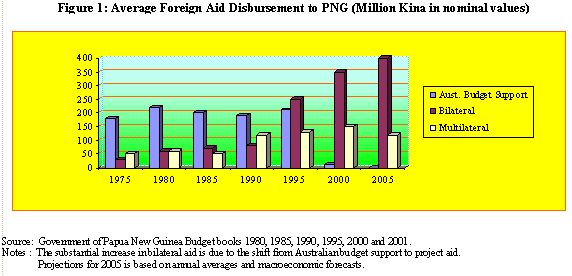
Foreign aid, although helpful particularly for the poorer provinces, is not adequate in accelerating Papua New Guinea’s economic development. This kind of international resource flow is largely governed by factors outside Papua New Guinea’s control; it is highly fluctuating; it is inadequate; and it is often being mismanaged. It should also be observed that much of the foreign aid is directed towards the ordinary activities of the public sector and/or for humanitarian purposes. Little, if any, of the aid is utilized for the development of the private sector, or for the establishment of institutions for entrepreunership support. In addition, aid is mainly ‘tied’ in that it is allocated by donor countries to specific sector, project or purpose in the country. Put differently, PNG is normally incapable of influencing the allocation of much of the financing among her developmental programs, or among other critical needs. The shift in the Australian aid from budget support to project support for instance, has already shown signs of the Government losing all control over the allocation and utilization of the only aid share it once had direct influence.
Recommendations for Improving Aid Effectiveness in Future
Given the successes and failures of foreign aid over the past 25 years, let us focus on several measures that could help to improve the capacity of the Government to manage its aid resources effectively in future. First, donors have to start taking this issue more seriously and stop trying to bypass the central government. The widespread belief of both free-market economists and NGOs that government is the problem and not part of the solution has become a self-fulfilling prophecy. In fact, far from undermining the private sector, a limited but effective government is needed to enable a vibrant civil society and strong business sector. It is the best means to foster both economic growth and poverty alleviation. Donors must devote greater attention and resources to help build the capacity of the Government to effectively manage aid, even as they encourage the central government to retrench from nonessential functions.
This entails more support to the policy, planning, and evaluation divisions of key Government departments including the Department of Finance & Planning, as well as to central budgeting activities. Perhaps more important, it entails a greater respect for the integrity of the national budgeting and investment planning processes of government during the aid cycle. Donors should assist the Government to develop her five-year rolling development plans and medium term investment strategies to set the road map and increase the coherence of government development efforts. Basing their aid on the Medium Term Development Strategy (MTDS) has seen a lack of focus and coherence in their operations. Donors should ensure that aid activities are explicitly integrated into these processes, so that the long-term recurrent expenditure implications of aid are formally planned, budgeted and accounted for.
Second, donors should give preferences to a government that demonstrates
commitment to improve its management of aid.
Current efforts to promote performance-based allocation of aid should be continued and deepened. It is important to establish clear
incentives to the Government to improve its capacity to manage aid resources. With poorly
performing governments, foreign aid should be refocused onto the non-governmental sector
and the meeting of basic needs and human capital investments.
In this context, donors must allow the Government to play a larger role in the design, management, and evaluation of aid activities. Rather than ‘pushing’ aid and seeking short-term results, donors should rather help the Government formulate its own preferences and act upon them, even if this means lower aid levels in the short run. Encouraging the decentralization process, privatization, and the growth of civil society are all appropriate and desirable, but donors should not view them as substitutes for central government institutions.
Third, the World Bank and IMF's economic stabilization and adjustment efforts should be supported. Achieving macro-economic stability is a prerequisite for the effective use of public resources, including foreign aid. Progress on such issues as poverty reduction and child welfare will not be sustained in the absence of steady growth and healthy public finances. There is thus no alternative to the sometimes quite painful reforms advocated by the international financial institutions, which have gained valuable experience at reform implementation. At the same time, more attention should be devoted to enhancing local capacities in provinces undergoing economic reform to ensure that they are not eroded by the fiscal crisis. Wholesale reform of the public service may be prohibitively expensive in the short run, but the donors can and should begin to upgrade key parts of the civil service right away, most notably those involved in economic policymaking like the Department of Finance & Planning.
Fourth, donor coordination efforts should be refocused. It is a peculiar irony of aid today that donors do not coordinate their individual aid coordination efforts. Groups like the Development Assistance Committee, Consultative Group Meetings or the National Development Forums are useful avenues for donors to engage in dialogue with each other and to harmonize their policies and procedures. They should be reinforced. At the country level, however, the Government should be empowered to coordinate all aid activities and donor-directed forums such as the Roundtables or the Consultative Group meetings need to be progressively downgraded.
The donors can, however, undertake a number of measures at the country level to facilitate Government coordination efforts. For instance, donors should consider specialization in a few sectoral and sub-sectoral areas, in which they have a comparative advantage. The resulting decrease in the number of donors present in any one area would facilitate governmental coordination and thus increase effectiveness. Similarly, the World Bank or the ADB should be identified as a “lead donor” and charged with conducting the policy dialogue with the Government and establishing the broad policy framework within which other donors would plan their activities. This would free the Government from the current burden of engaging in policy dialogue with some 20 different donors. Given their unparalleled policy analysis capacities, the World Bank or the ADB are uniquely qualified to play this role.
Selected Bibliography and References
Asian Development Bank, June 1998, Country Assistance Plan for Papua New Guinea, ADB Manila.
Asian Development Bank, Asian Development Outlook, 1999 and 2000, ADB Manila.
Department of Finance & Planning, Annual Budget books (1980, 1985, 1990, 1995, 2000 and 2001), Government of Papua New Guinea.
Foreign Aid Management Review of Papua New Guinea, 1998, ADB TA No.3011 – PNG, ADB Manila and Government of Papua New Guinea.
Hnanguie, Christopher T., 2001, “Defining Indicators for Measuring Development Impact”, Country Strategy and Plans for Bangladesh, Nepal and Sri Lanka, PW1, ADB Manila.
Hnanguie, Christopher T., 2000, “Economic and Financial Analyses of Capital Investments: Strategies and Techniques of International Financial Institutions and Multinational Corporations”, Master in Business Economics, Thesis, University of Asia - Pacific.
Hnanguie, Christopher T., 1997, “The Impact of Foreign Aid on Papua New Guinea’s Economic Development,” Economic Briefing Papers, Department of Finance & Planning, Government of Papua New Guinea.
Hnanguie, Christopher T., 1997, “Questioning Development Impact: Papua New Guinea Why So Rich Yet So Poor?” Discussion Papers, Department of Finance & Planning, Government of Papua New Guinea.
Hnanguie, Christopher T., 1992, “The Political Economy of Foreign Aid in Economic Development,” Master in International Political Economy, Thesis, Victoria University.
International Monetary Fund, 2000, World Economic and Financial Surveys, Washington DC.
National Planning Office, 1997, Medium Term Development Strategy: A Bridge into the 21st Century, Government of Papua New Guinea.
“Moving the Poverty Agenda Forward”, 2001, ADB Newsletter, ADB Manila.
Office of International Development Assistance, 1994, Report on Foreign Aid 1993, Department of Finance & Planning, Government of Papua New Guinea.
World Bank, 1998, PNG Country Portfolio Performance Review, Washington DC.
The Author: Christopher Taylor Hnanguie - click to return to beginning of article

Christopher Taylor Hnanguie is a Programs Economist (Macroeconomist) with the Asian Development Bank (ADB). In January 1998 at age 29, Mr. Hnanguie became the first young economist from the Pacific region and the first Papua New Guinean to be employed by the ADB or by any international development finance institution as a member of its regular professional staff cadre. Based in the Philippines, Mr. Hnanguie has worked extensively throughout the Asia-Pacific region including in Pakistan, Bangladesh, Thailand, Indonesia, Malaysia, Myanmar, Philippines, Nepal, Sri Lanka, China, Laos, Cambodia, Vietnam, Maldives, Solomon Islands, Vanuatu, Fiji, Samoa and PNG.
Mr. Hnanguie's specialty is in Macroeconomic Analysis and Development Intervention Strategy Formulation and Planning. He is trained in various technical aspects of Development Cooperation including in Country Macroeconomic Analysis; Development Intervention Strategy Formulation and Planning; Program and Project Planning and Appraisal; Sector Review and Analysis; Economic and Financial Analysis; Social and Environmental Impact Assessment; and Program/Project Management and Evaluation of various sectors. Mr. Hnanguie was assigned to all major operational departments of ADB including with the Pacific Operations Office; Economic Analysis and Research Division; the Post-Evaluation Office; the Water Supply & Urban Development Division; Programming Department (West) and the Mekong Department’s Country Strategy and Programming operations.
Besides ADB, Mr. Hnanguie has also received specialized technical training on the operations, policies and procedures of a number of international development finance institutions including the World Bank group, the International Monetary Fund, the European Union, Japan Bank for International Cooperation and the United Nations development system (UNDP, UNCTAD, UNFPA, UNICHEF, ESCAP) between 1994 and 1997. He has also received technical trainings from the Australian Agency for International Development (AusAID) and the Japan International Cooperation Agency (JICA).
Prior to joining the ADB in January 1998, Mr. Hnanguie held senior positions with the Government of PNG, including as Principal Adviser on Development Cooperation and Senior Programs Officer on Technical & Economic Cooperation among Developing Countries (TCDC/ECDC) with the Department of Finance & Planning from 1994 to 1997. He was responsible for monitoring and analyzing the international economic trends; evaluating the operational strategies/policies of donors and international financial institutions; and advising government on the appropriate means and approach for PNG’s development cooperation with aid donors including in negotiations for program and project financing and co-financing. He was also responsible for Planning, Programming and Coordination of external resources into the Government’s budgetary and investment/development programs.
Apart from a brief stint with the University of PNG’s Institute of Distance & Continuing Education as acting Coordinator and Tutor in the Social Sciences in 1993, Mr. Hnanguie also served with the Department of Foreign Affairs & Trade in 1994 as a Foreign Service Officer. A trained Foreign Service diplomat, Mr. Hnanguie has officially represented PNG in various international forums throughout Asia, Pacific and Europe including as Technical Adviser on Development Cooperation matters to many government delegations.
Educated in New Zealand, the Philippines and PNG, Mr. Hnanguie holds a Masters degree in Business Economics (MBE) from the School of Economics, University of Asia-Pacific; a Master of Business Administration (MBA) from the joint Asian Development Bank and Ateneo University MBA program; a Masters degree in International Political Economy (MA) from Victoria University; and a BA in Economics & Political Science from the University of PNG. His academic interests are in the fields of Macroeconomics, Business and Development Economics, Development Cooperation, Development Finance and International Political Economy. He has written several articles and contributed to a number of international journals on various aspects in these fields.
This article has been republished in www.pngbuai.com with permission from the author in November 07, 2003
Copyright ©2003 Christopher T. Hnanquie
NB PNGBUAI.COM is a web collection of Books Useful Articles and Information, managed by Dr. John Evans in Papua New Guinea and in part sponsored by
- H.E.L.P. Resources Inc. Community Development NGO in East Sepik Province.
- Original startup funding support came from Canada's I.D.R.C International Development and Research Corp. in 1997
Web publishing support and optimization for PNGbuai.com is from www.netpac.com search engine services